The path to an industrial flight deck in Europe is elegant on the surface and exacting underneath. From the traveler seat, aeronautics looks uncomplicated. A sleek captain welcomes the cabin, the aircraft raises easily through cloud, and hours later it works out onto the runway with the kind of silent self-confidence that makes the job seem almost ritualistic. The reality is much more demanding. Ending up being an industrial pilot in Europe needs cash, discipline, stamina, and an unusual tolerance for being judged against ruthless standards.
It is also among the most gratifying expert journeys available. Couple of occupations integrate technical accuracy, global flexibility, structured development, and the privilege of regulating innovative equipment in such a visible means. For the appropriate person, the allure is instant. For the not really prepared, it can come to be pricey really quickly.
Europe uses a well-defined course, largely built around EASA, the European Union Aviation Safety And Security Agency. That common structure brings consistency across many countries, however it does not make every college equivalent, every airline company identical, or every training pathway similarly practical. The most intelligent prospects deal with pilot training as both an air travel decision and a monetary one.
Understand the permit you are in fact pursuing
Many aspiring pilots state they intend to "end up being a pilot" when what they really imply is that they wish to be paid to fly airplanes. In Europe, that typically implies pursuing a frozen ATPL, which is the practical entry factor for an airline first police officer position.
A frozen ATPL is not a standalone beginner's permit. It is the combination of a Commercial Pilot Licence, instrument score, multi-engine qualification, conclusion of the ATPL concept exams, and a Multi-Crew Collaboration program, generally with some additional elements relying on the college. The licence stays "frozen" till you construct sufficient flight experience, commonly 1,500 hours under the appropriate conditions, whereupon it can be "unfrozen" right into a full ATPL.
That distinction issues due to the fact that flight institutions frequently market the glamour of an ATPL while the trainee is, in practice, purchasing an organized training plan that culminates in airline employability instead of immediate captaincy. The marketing language can be glossy. The lawful and operational information are where your future sits.
The initially gate is medical, not academic
Before anybody pays a deposit, publication an EASA Course 1 medical examination. Do this very first. Not after a test lesson, not after comparing uniforms on college web sites, and definitely not after authorizing a financing agreement.
The Class 1 medical is the requirement required for business pilot training. It assesses vision, hearing, cardio health and wellness, and a range of other clinical criteria that can impact fitness to fly. A lot of healthy, qualified people pass without drama, but some discover a problem that needs review or makes the career not practical. Colour vision worries, prior mental health treatment, specific drugs, and heart findings can all make complex the process.
This is not a reason for stress and anxiety, but it is a factor for series. A candidate can recuperate from an unsatisfactory institution see. Recuperating economically from paying for training you can not legitimately complete is a different story.
There is another point below that individuals frequently miss out on. Medical health and fitness is not a single obstacle. It becomes part of your professional life. If you want this job, begin living like somebody who means to protect a Course 1 clinical for years. That indicates rest, tension management, practical alcohol practices, and sincerity with medical inspectors. The polished pilot photo implies little if your health discipline is poor.
Choose your training path with clear eyes
In Europe, the majority of students choose between incorporated training and modular training. This is where passion satisfies budget.
Integrated training is the streamlined, academy-style path. You start with minimal or no experience and relocate through a permanent program created to carry you from novice to airline-ready prospect in a structured sequence. The speed is much faster, the branding is commonly slicker, and the institution normally occurs as a bridge to airline employment. For a young trainee with family assistance, cost savings, or access to financing, integrated training can feel reliable and immersive.
Modular training is more adaptable. You complete the elements in phases, usually beginning with an Exclusive Pilot Licence, then hour building, ATPL theory, commercial training, instrument score, et cetera. It can take longer, yet it offers you better control over timing, cash flow, and institution selection. It likewise enables fully grown pupils to continue working while progressing.
Neither path is inherently premium. I have actually seen incorporated grads employed rapidly due to the fact that their college had an outstanding credibility and sharp airline company preparation. I have actually additionally seen modular prospects come to evaluations with deeper functional judgment because they had assembled the journey together, functioned around weather condition, changed aircraft kinds, and found out to solve issues rather than simply move via a package.
If your funds are tight, adaptability matters. If your academic practices are irregular, the framework of integrated training may shield you from your own positive outlook. The elegant option is not the one that appears most prominent. It is the one you can complete without monetary collapse or avoidable compromise.
What the trip normally looks like
The sequence varies a little by country and institution, however the broad progression knows across Europe.
Obtain an EASA Class 1 medical and determine whether to train incorporated or modular. Complete fundamental trip training, which normally begins with an Exclusive Pilot Licence or its integrated equivalent. Pass the ATPL concept topics, then advance through hour building, industrial manoeuvres, multi-engine training, and tool flying. Finish the specialist programs such as MCC, often with Jet Alignment Educating depending on the provider. Apply for airline company roles, evaluations, and type-rated entrance opportunities.Those 5 lines look cool theoretically. Living them is more unequal. Weather hold-ups training. Examination schedules slide. Airplane go technology. Trainers leave. Funding voids show up. Students stop working an exam, absorb the blow, then return sharper. The European training system is strenuous, but not frictionless.
The academic side is larger than numerous expect
The ATPL concept curriculum is possible, however it is broad and unrelenting. Relying on the course and service provider, you may research subjects such as air legislation, performance, trip planning, weather forecasting, human efficiency, general navigation, radio navigation, and concepts of trip. Also talented trainees underestimate the quantity at first.
This is just one of those moments where air travel punishes casual self-confidence. People who cruised with college on charm and speed in some cases struggle because ATPL theory incentives uniformity greater than style. Students that construct a constant routine, two or three major study obstructs per day, often outperform brighter schoolmates that depend on final intensity.
Meteorology should have unique respect. So does performance. So does air law, because details matter and the tests are designed to evaluate precisely that. An expert pilot does not simply recognize just how to relocate an airplane. An expert pilot understands restrictions, margins, treatments, and the reasoning behind them.
If you have actually not examined seriously for many years, expect a modification duration. There is no embarassment because. A former consultant, engineer, or army policeman might bring maturation and self-control, yet they still require to relearn exactly how to absorb and keep a big technical syllabus. On the other hand, an eighteen-year-old with excellent research study routines may flourish academically despite having little life experience. Aeronautics teems with these reversals.
Flight training is where character gets exposed
The first flying lessons can be envigorating. Taxiing a light aircraft onto the runway and taking control for the very first time has a rare glamour to it, even in a little training cabin with used furniture and a headset that has actually seen better days. Yet after the novelty fades, training comes to be a mirror. It reveals you just how you react under stress, exactly how you handle criticism, and whether you can improve without drama.
Some trainees are smooth on the controls however weak in situational understanding. Others are mechanically awkward initially yet become exceptional instrument pilots since their check, discipline, and calmness are exceptional. A few are all-natural pilots. Many end up being skilled via repetition.
There is a vital cultural aspect in European training also. Criteria are procedural. Phraseology matters. Briefings matter. Lists issue. You are being trained not to improvise theatrically, however to operate within an accurate system. Prospects who withstand that structure commonly delay. The cabin is not a phase for character. It is a place for judgment, coordination, and calm.
I have seen pupils end up being consumed with hand-flying finesse while neglecting radio work and planning. That is a novice mistake. Airline companies work with total operators, not Sunday aerobatic romantics. The refined candidate seems made up on regularity, plans precisely, takes care of workload, and does not end up being messy when things wander slightly off script.
Money, and the component people like to romanticise
Pilot training in Europe is costly enough to be worthy of simple language. Depending upon nation, institution, route, airplane accessibility, and what is bundled, complete training to an airline-ready frozen ATPL commonly drops someplace around EUR70,000 to EUR120,000, and often much more. Those numbers change with fuel costs, simulator gain access to, holiday accommodation, exchange rates, and whether your program includes specific add-ons.
The classy brochures seldom harp on re-test costs, extra trip hours, accommodation throughout stage adjustments, headset acquisitions, permit concern fees, medical renewals, traveling to analysis centres, or the easy price of being not available for other work. Yet these are precisely the expenses that catch individuals off guard.
A prudent spending plan consists of backup. Ten to fifteen percent is practical. Much more, if your finances are delicate. Training hardly ever continues in an excellent straight line. A single failed skills examination, a run of inadequate climate, or a school scheduling traffic jam can trigger additional expense. That does not indicate the institution is unethical. It suggests flying training is functional, not theoretical.
Aviation has always brought in individuals ready to overextend themselves for the desire. Some make it work superbly. Others emerge certified, indebted, and still awaiting their very first airline break. There is the aristocracy in commitment, yet not in pretending the numbers do not matter.
Picking the right college, beyond the photography
A fine-tuned campus, matching epaulettes, and a fleet aligned in sundown light can make practically any kind of academy appearance tempting. The far better question is whether the school runs reliably, educates truthfully, and prepares trainees for the market that in fact exists.
What matters most is not reputation alone, however operational health and wellness. You desire sufficient airplane schedule, sufficient trainers, reasonable upkeep assistance, solid examination prep work, and transparent interaction around added costs. Ask existing trainees just how commonly they actually fly, exactly how frequently lessons are rescheduled, and whether trainees complete near to the projected timeline. Their solutions are normally more revealing than any type of admissions presentation.
Airline partnerships deserve analysis. Some are purposeful, with cadet pipelines or analysis benefits. Others are aspirational branding. A logo design on an internet site is not a task deal. Ask what percent of graduates are worked with within a year, what sort of airline companies employ them, and whether the school can separate historical positioning from existing conditions.
Location matters as well. Training in Spain, Portugal, Greece, or southern France might use better weather condition continuity than north Europe. That can lower delays and speed development. On the other hand, emigrating introduces housing expenses, legal paperwork, and distance from your support group. A school in your house country may be slower in winter months but less complicated to sustain psychologically and financially.
Hours, experience, and the unpleasant void after training
Finishing training does not constantly lead right right into an airliner seat. Sometimes it does, especially during strong hiring cycles. In some cases it does not. This is where assumptions require maturity.
Airlines recruit in waves. A booming market can take in low-hour pilots promptly. A softer market might demand perseverance, networking, and continued expenditure. Some recently qualified pilots take functions as instructors, ferry pilots, survey pilots, or in various other entry-level flying work to develop time. Others wait on airline company evaluations while maintaining present in simulators or leasing aircraft periodically, which is costly but often necessary.
The initially task is typically less attractive than the ambition that launched the journey. That is regular. Every sleek long-haul captain once duke it outed reduced hours, unsure timing, and a training document that still really felt fresh. What matters is momentum. A prospect who remains current, enhances interview technique, and stays properly involved generally exceeds the one that wanders into laziness after obtaining the licence.
Type scores and who pays for them
A type ranking certifies you to fly a particular aircraft type, such as a Jet A320 family or Boeing 737 family members. For numerous airline company roles in Europe, this is the last specialist layer prior to line training. The financial treatment of kind rankings differs considerably.
Some airlines sponsor or totally money the type rating. Some require partial contribution. Some expect the prospect to pay totally, which can include 10s of countless euros to the bill. This is just one of one of the most essential details in any type of work offer due to the fact that it influences not just your prompt finances, yet also your capability to walk away if the terms are poor.
Years earlier, self-funded type ratings were discussed with a kind of resigned normality in parts of the industry. Today, prospects are commonly extra cautious, and appropriately so. Paying heavily for a type score without robust contractual clearness is a significant risk. Airline company insolvencies and working with freezes are not theoretical occasions in Europe. They occur. Read every bond, every repayment stipulation, every line about training failing, and every condition connected to leaving the firm early.
Language, citizenship, and lawful realities
English is the operating language of international aeronautics, however that does not make regional language irrelevant. In Europe, some airlines are comfortable with English-only cockpit operations while others highly prefer or successfully require fluency in the national language, especially for public statements, company interaction, or domestic operations.
Citizenship and right-to-work standing can likewise form your leads. A permit is not a visa. If you require sponsorship, the variety of companies might narrow. After Brexit, British nationals seeking work in parts of Europe found that permit credibility and work civil liberties relate but different concerns. Several solid prospects forget this until late in the process.
If you mean to learn one jurisdiction and operate in one more, validate the licensing and employment ramifications early. It is workable, yet it is management aeronautics, which suggests the details are hardly ever forgiving.
The individual qualities airline companies notice
At option, airline companies are not just asking whether you can fly to common. They are judging whether you are most likely to be successful in a firmly managed, team-based atmosphere where mistakes can end up being expensive or hazardous very quickly.
The toughest prospects have a tendency to share a few behaviors:
- they quick plainly and pay attention well they remain calm when a plan changes they approve comments without defensiveness they program disciplined prep work instead of staged confidence they recognize that crew participation is as crucial as raw handling skill
That last point is worthy of emphasis. Aeronautics folklore still flatters the single all-natural pilot. Airline procedures do not. The modern-day business cockpit benefits humility, standardisation, interaction, and constant reasoning. A perfectly flown non-precision strategy means little if your CRM is poor and your decision-making is brittle.
Lifestyle, stature, and the fact behind the uniform
An industrial pilot's life can be remarkable, but it is not consistently glamorous. The noticeable side is seductive. Crisp customizing. Fine resorts on specific routes. Layovers in cities other individuals conserve all year to check out. The deeper fact is much more textured.
Early years might entail base jobs you did not choose, book tasks that disrupt rest, short-haul lineups that really feel relentless, and revenue that looks respectable yet not extravagant relative to the cost of training. Long-haul settings, costs providers, and coveted bases typically feature time, ranking, and luck.
The flight schools that accept GI Bill luxury, if one is sincere concerning it, lies much less in superficial polish than in mastery. It is the privilege of populating a role improved count on. Walking through an airport terminal in attire is positive. Guiding a complicated airplane through poor climate, with professionalism and reliability so total that travelers hardly notice the difficulty, is something richer. That is gained elegance.
A sensible timeline
A quickly, nonstop path from zero experience to licence completion can take about eighteen months to two years. A modular course might take longer, frequently 2 to 4 years relying on financial resources, weather, and work dedications. Getting to the very first airline seat can be swift during strong need or materially slower in a weak cycle.
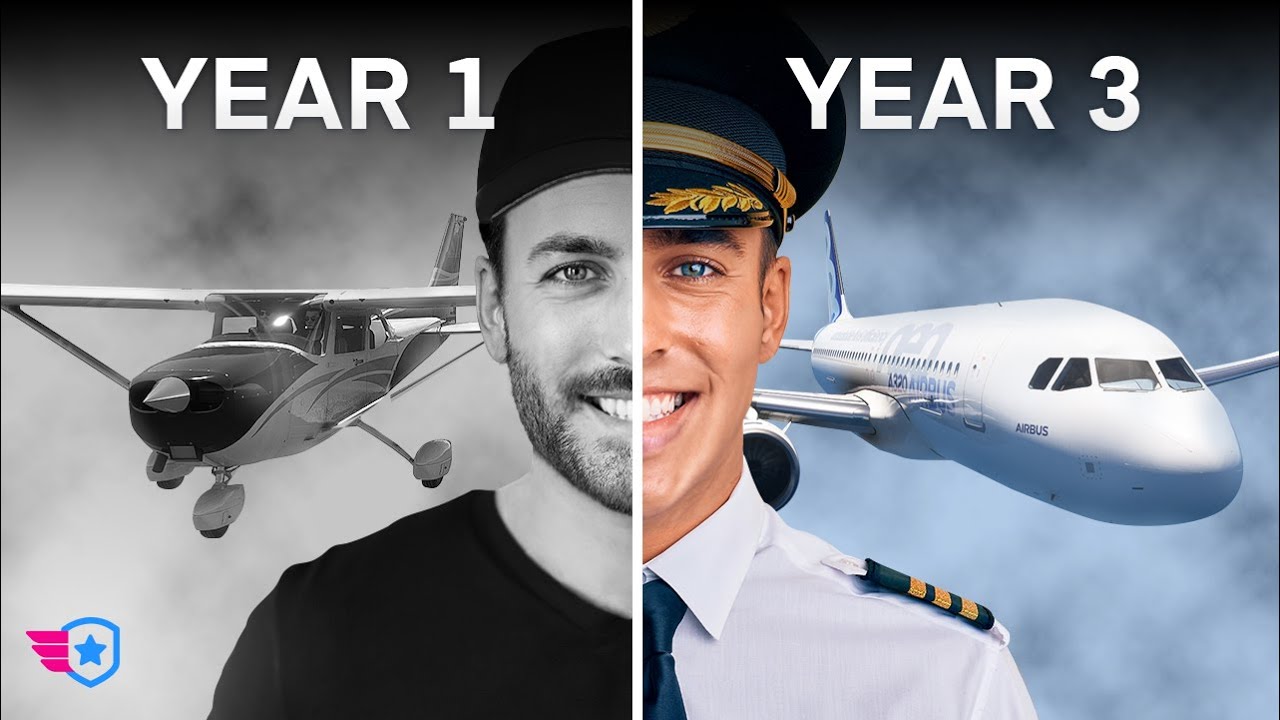
This is why inflexible promises should be dealt with carefully. Any kind of school that provides a perfectly straight course without delays, no added expenses, and near-certain airline company positioning is marketing goal greater than functional fact. Aviation awards positive outlook, however just when coupled with realism.
Before you commit, ask yourself the expensive questions
Romance has an area in aviation. It obtains many people through the very first tough phases. Yet prior to you commit, interrogate the desire correctly. Can you maintain the monetary pressure without panicking? Can you study when the material comes to be repetitive? Can you accept criticism from trainers younger than you? Can you protect your clinical, your technique, and your professionalism and reliability when nobody is seeing? Can you tolerate a period after training when the following action is not immediate?
If the truthful answer is yes, Europe provides an extremely systematic course into business aeronautics. The training is requiring, but it is knowable. The criteria are high, but they show up. The career remains one of minority in which ability, judgement, and calmness still bring an extremely particular type of prestige.
There is no shortcut worth taking. There is, nonetheless, a clear path for those ready to approach it with accuracy. Beginning with the clinical. Select the training pathway that your finances can bear. Select an institution for substance, not spectacle. Study hard. Fly commonly. Build strength early. Then maintain going, because in European air travel, progress belongs much less to the dreamer than to the candidate that can transform aspiration into treatment, every day, up until the cockpit door ultimately closes behind them as a professional.